
Back Pain Interventions That Actually Help
Skip the mattress exile. Here is what current guidance says about movement, meds, and when back pain needs real medical attention.
This article is for general education, not personal medical advice. See a clinician for diagnosis and treatment—especially if you have red-flag symptoms.
Back pain is ordinary and expensive. It is also one of the most myth-soaked topics on the internet. An older draft I revisited claimed that “more than 200 million Americans” suffer back pain and that doctors rarely suggest exercise. Modern data and guidelines tell a sharper, more useful story.
What the numbers actually look like
Lifetime-prevalence estimates for low back pain often land around 50–80%. In recent U.S. surveys, roughly one in three to four adults report back pain in a recent three-month window—not 200 million at once. Chronic low back pain (pain lasting 12 weeks or more) shows up in about 13% of U.S. adults in primary-care summaries.
The bill is real: spine-related care and productivity losses are commonly estimated in the tens to hundreds of billions of dollars a year in the U.S., depending on what gets counted. That is why getting the first response right matters—for people and for systems.
Most back pain is nonspecific—and often improves
A large share of acute low back pain is nonspecific: sore muscles, irritated joints, deconditioning, stress, awkward sitting, a sudden lift. Many people improve over days to weeks with conservative care. Some lucky episodes fade and barely return. Others linger and need a longer plan.
That does not mean “ignore it.” It means panic-surgery and mattress exile are usually the wrong opening move.
Interventions that match current guidelines
1. Stay active (do not camp in bed)
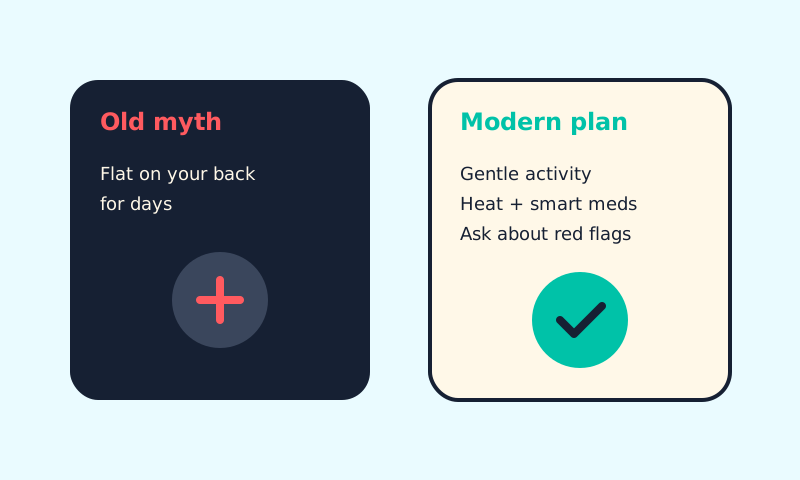
Major guidelines agree: continue usual low-impact activity and avoid prolonged bed rest. Movement that you can tolerate—walking, light mobility work, gradual return to tasks—beats stillness for most nonspecific acute pain.
2. Use simple non-drug tools first
Superficial heat, pacing, and short breaks from miserable chairs help more people than doom-scrolling “miracle cures.” For chronic pain, structured exercise therapy, physical therapy, and other nonpharmacologic options are first-line in many recommendations.
3. Medication, carefully
When medicine is appropriate, guidelines often favor a short course of NSAIDs at the lowest effective dose if you can take them safely. Opioids, benzodiazepines, and “just push through with whatever is in the cabinet” are not the modern default. Pain medicines are not “killers” by slogan—but misused drugs and alcohol as coping tools are a serious risk and a reason to get real care, not a DIY pharmacy.
4. Fix the setup that keeps reinjuring you
Weight change, workstation height, couch posture, and weak hips/core are boring—and effective—levers. Stretching and mobility work support range of motion; they work best as part of a broader activity plan, not as a once-a-year guilt session.
5. Manual care and adjuncts—as options, not magic
Spinal manipulation, massage, acupuncture, and similar approaches appear as adjuncts in some guidelines. They can help selected people. They are not a substitute for red-flag evaluation or for rebuilding capacity through movement.
Know the cause when you can—but do not wait for a perfect theory before you start gentle, sensible activity.
When to get urgent help
Seek prompt medical care for red flags such as: trauma with severe pain, unexplained weight loss, fever, history of cancer, progressive leg weakness, bowel/bladder changes, saddle numbness, or pain that is getting worse despite reasonable self-care. Imaging is not automatic for every sore back; it is targeted when history and exam raise concern.
A practical starter plan this week
- Walk daily at a pace you can sustain; stop short of sharp, escalating pain.
- Use heat for 15–20 minutes a few times a day if it feels good.
- Break up long sits—stand, hinge, and reset every 30–45 minutes.
- If you use OTC NSAIDs, confirm they are safe for you and keep the course short.
- If pain lasts beyond a couple of weeks, or function is stuck, talk with a clinician about physical therapy and a tailored plan.
What we kept—and what we tossed—from the old draft
The original notes were right that chronic pain wrecks days, that inactivity and poor sitting habits pile on, and that people sometimes turn to alcohol or drugs when care feels absent. Those threads stay.
We tossed the inflated headcounts, the claim that clinicians “rarely” recommend exercise (guidelines now push the opposite), sensational drug language, and medical-miracle anecdotes that do not survive contact with evidence.
Back pain is common. Helplessness does not have to be. Start with movement you can own, protect yourself from red flags, and build a plan with a professional when the plot thickens. More practical notes live in the general blog.