
Texas Heat by the Numbers: Days Over 95°F and What They Mean for Your Garden
Texas leads the nation in hot days. Here is what 10 vs. 70 days over 95°F means when you are trying to keep plants alive.
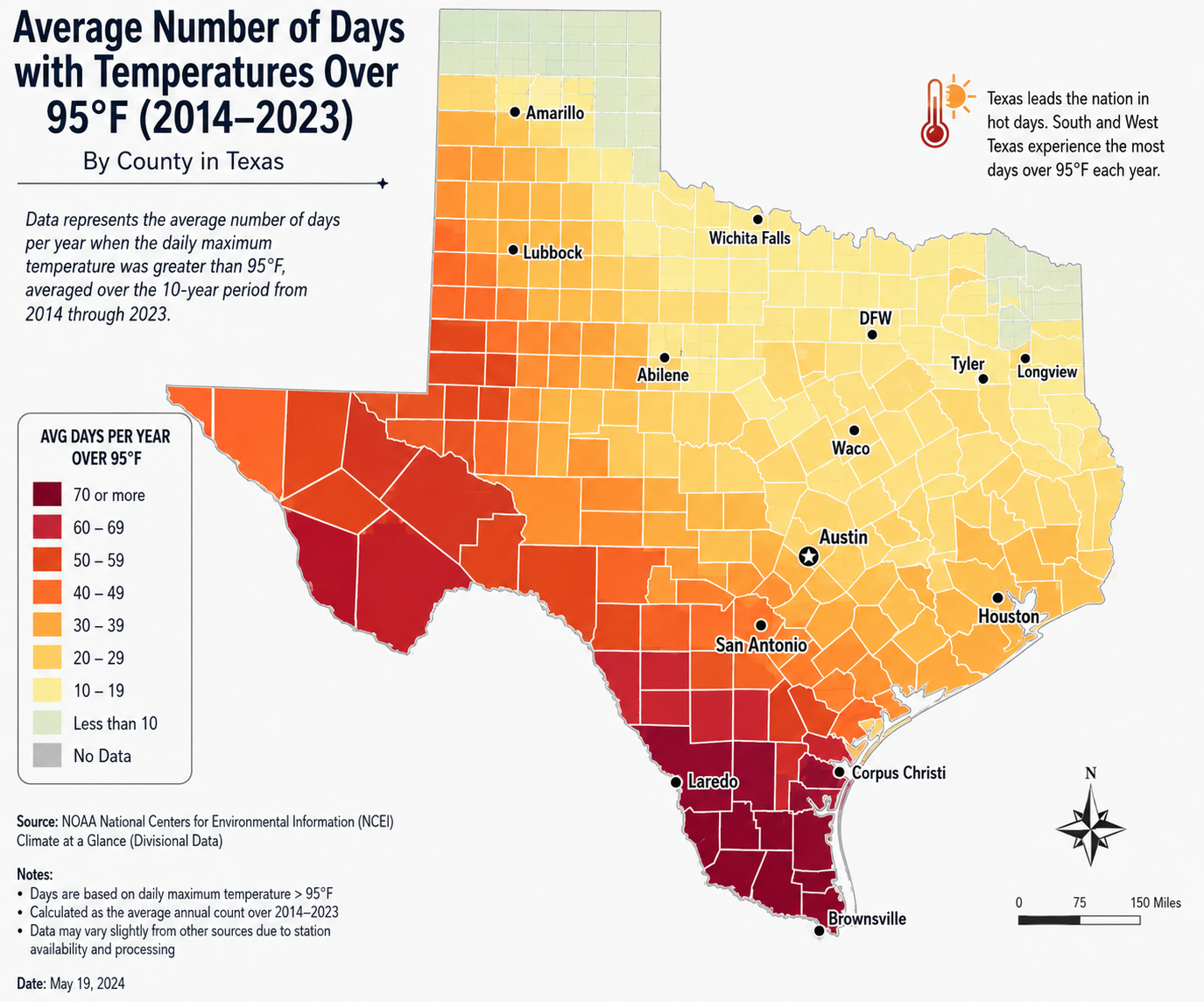
If you garden in Texas, heat is not a summer subplot—it is the main character. The map above makes that concrete: it shows, county by county, how many days on average hit a daily maximum over 95°F from 2014 through 2023.
Texas leads the nation in hot days. South and West Texas take the hardest hits, while the Panhandle and pockets of East Texas catch a relative break. Your watering schedule, plant list, and shade plan should follow that geography—not a generic “zone” tip written for somewhere milder.
What the map is telling you
The data counts days when the daily high exceeded 95°F, then averages those days across a decade. Color runs from cooler greens (under 10 days a year) through yellows and oranges into deep maroon (70 or more days).
- South and West Texas — many counties land in the 60–70+ day range. Think long stretches where afternoon heat is not an exception; it is the calendar.
- Central Texas corridor (Austin, San Antonio, Waco and neighbors) — still plenty of orange-to-red heat, often dozens of days over 95°F.
- DFW and parts of East Texas — fewer extreme days than the south, but still enough to stress cool-season crops and shallow-rooted transplants.
- Panhandle and far north — often under 20 days, sometimes under 10. Hot spells still matter, but the season shape is different.
A garden in Laredo and a garden near Amarillo are both “Texas gardens.” They are not the same job.
Why 95°F matters in the bed
At sustained highs above 95°F, soil moisture disappears fast, pollen can fail on heat-sensitive crops (tomatoes, peppers), and leaves burn when water cannot keep up with demand. Mulch, deep watering, afternoon shade, and heat-tolerant varieties stop being optional upgrades—they become the baseline.
Gardening moves by heat load
If your county averages 50–70+ days over 95°F
- Prioritize heat lovers: okra, southern peas, sweet potatoes, eggplant, basil, lantana, salvias.
- Use 2–3 inches of mulch and water deeply less often, early morning preferred.
- Add shade cloth (30–50%) for summer salad beds and new transplants.
- Expect a pause in tomato set during the worst stretches; plan fall production as seriously as spring.
If your county averages under ~30 days
- You still get scorcher weeks—protect seedlings—but you have more room for cool-season windows.
- Watch wind and hail as much as heat; Panhandle weather swings hard.
- Do not skip mulch; dry air and wind strip moisture even when the day count looks kinder on a map.
How to use this locally
- Find your county on the map and note which color band you live in.
- Rewrite your “summer bed” list for that band, not for a catalog photo from somewhere else.
- Build one heat habit this week: thicker mulch, a soaker hose, or a shade panel over the most fragile bed.
Heat is not a reason to quit gardening in Texas. It is a reason to garden on purpose. For bed-building that survives a busy, hot season, see Raised Beds for Busy People. More soil-side notes live in the gardening blog.